How Long Does Invisalign Take? Realistic Timelines by Case

Most Invisalign cases take 12–18 months, but mild cases can finish in 6 and complex ones run 24+. Here’s what determines your timeline — and what speeds it up or slows it down.
 Jessica Wu
Most Invisalign cases take 12–18 months, but mild cases can finish in 6 and complex ones run 24+. Here’s what determines your timeline — and what speeds it up or slows it down.

The Invisalign process in 7 steps: consultation, 3D scan, ClinCheck plan, attachments, tray wear, refinements, and retainers — with realistic timelines for each stage.

The cheapest way to straighten teeth isn’t always the lowest sticker price. Compare at-home aligners, dental schools, and phased treatment — and the risks that erase savings.

Clear aligners are a qualified medical expense for HSAs and FSAs. 2026 limits: HSA $4,400/$8,750, FSA $3,400 — plus the timing traps that cost people their savings.

Most people finance Invisalign. Compare in-office 0% plans, third-party medical credit, and what financing really adds to your total — with worked math examples.

Dental insurance can cover Invisalign, but only through your plan’s orthodontic benefit — typically 25–50% up to a $1,000–$3,500 lifetime maximum. Here’s how to check your plan.

At-home aligners ($795–$2,295) vs in-office Invisalign ($3,000–$8,500): supervision, risk, and cost compared honestly — plus the SmileDirectClub lesson.
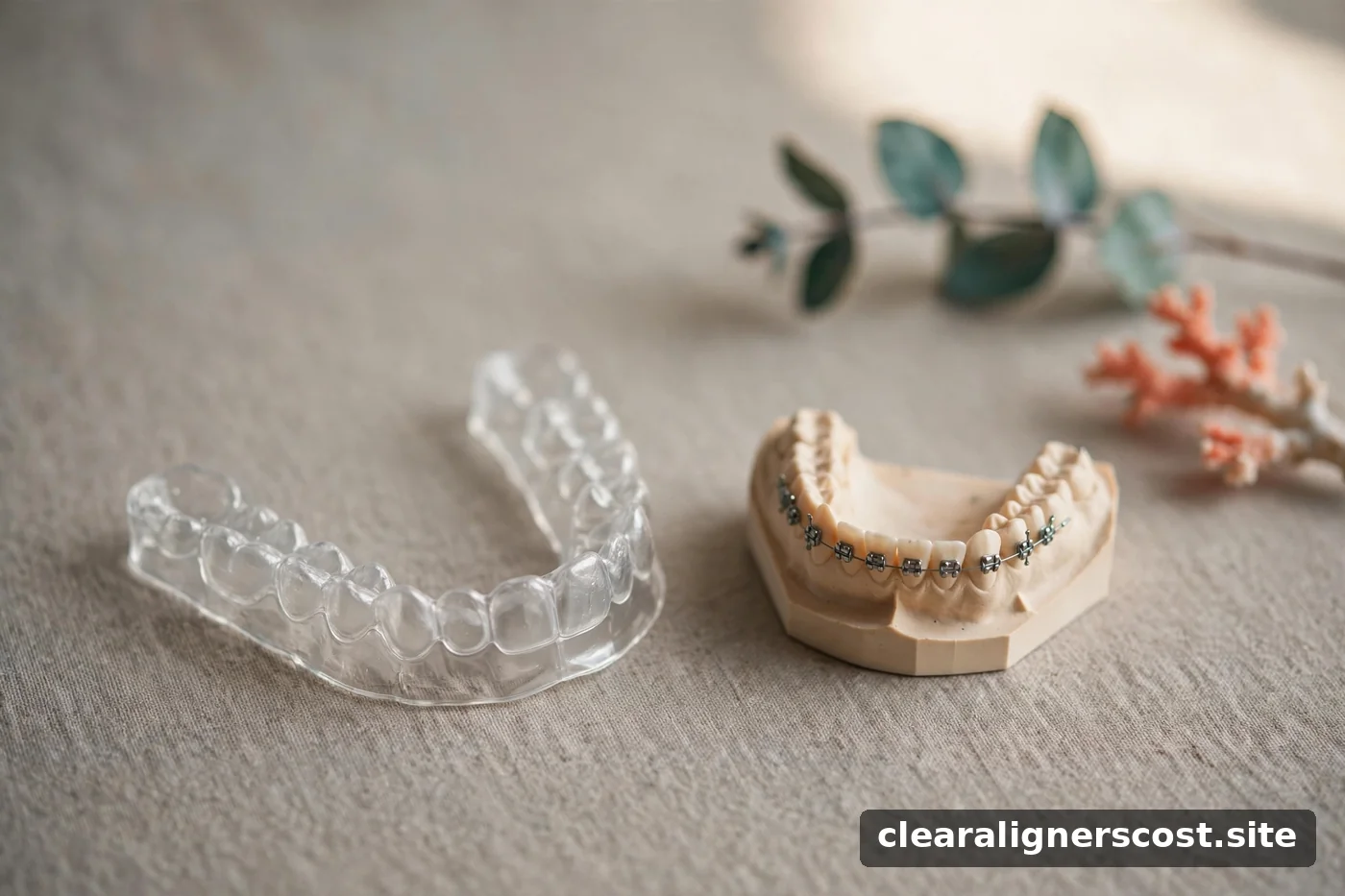
Invisalign vs braces in 2026: costs now overlap ($3,000–$8,500 vs $3,000–$7,000). Honest comparison of price, time, comfort — and the cases where braces win.

AlignerCo costs ~$795–$1,145 upfront — the cheapest aligner option. Honest research-based review: what”s included, the real trade-offs, and who should avoid it.

Candid costs ~$2,100 upfront vs Invisalign’s $3,000–$8,500. Honest Candid vs Invisalign comparison — hybrid model vs in-office care, cost, candidacy in 2026.