Direct answer: After Invisalign, expect to pay $400–$1,000 for a 4-pack of Vivera retainers (Invisalign’s official brand), and expect to wear retainers for the rest of your life — full-time for the first 6–12 months, then every night indefinitely. Over 10–20 years, retainer replacements typically add $2,000–$8,000 to the true lifetime cost of straight teeth.
Key takeaways
- Vivera retainers run $400–$1,000 for four sets of uppers and lowers — the standard post-Invisalign option.
- Wear them nearly full-time for 6–12 months after treatment, then nightly for life.
- Budget $200–$400 per year for replacements; that’s $2,000–$8,000 over 20 years.
- Cheaper options exist (Essix $50–$200/set, Hawley $150–$300), but fit and durability vary.
- Skipping retainers lets teeth drift back — relapse is gradual, then suddenly expensive to fix.
Why retainers are non-negotiable
Here’s the fact that surprises most patients: orthodontic treatment doesn’t end when the last aligner comes out. Your teeth have “memory.” The ligaments and bone around them spent years — or decades — in their old positions, and they naturally drift back toward them. This is called relapse, and it happens to everyone to some degree.
During treatment, the bone around your teeth softens so teeth can move. After treatment, it takes roughly 9–12 months for new bone to fully stabilize teeth in their new positions. Without a retainer holding everything in place during that window, teeth start shifting within weeks. And even after bone stabilizes, lifelong nightly wear is the standard recommendation because teeth continue to experience small forces — from chewing, grinding, and aging — for the rest of your life.
This isn’t a sales tactic. It’s the consensus across orthodontics, and it’s why every reputable provider includes a retainer discussion in the treatment plan. If your quote doesn’t mention retainers, ask — because it’s a real cost you’ll face either way. For context on how the whole process flows, see our Invisalign treatment process guide.
The Vivera wear schedule, phase by phase
Vivera is Invisalign’s official retainer brand, made from the same SmartTrack material as the aligners but thicker, since it’s built for long-term use. The typical wear schedule breaks into three phases:
Phase 1 — Full-time wear (first 3–6 months after treatment). Wear retainers at least 22 hours a day, removing them only to eat, drink, brush, and floss. This is the critical bone-remodeling window. Skipping wear here is the fastest route to relapse.
Phase 2 — Transition (roughly 6–12 months). Your provider evaluates whether the teeth have stabilized. Many patients step down to nighttime wear — about 8–12 hours — during this phase. Some providers keep patients full-time longer if movement was extensive.
Phase 3 — Nightly, indefinitely (12+ months onward). Once your provider confirms stability, you switch to wearing retainers every night while you sleep, for life — or as your provider recommends. “For life” sounds dramatic until it becomes a bedtime habit like brushing.
One important detail: Vivera retainers are thicker and more rigid than active aligners, and they’re designed to hold teeth still rather than move them. If a retainer ever feels tight after a few nights off, that’s your teeth telling you they’ve started to drift — put the retainer back in and mention it at your next checkup.
What retainers actually cost
Pricing varies by provider and region, but these are the well-documented ranges:
| Retainer type | Typical cost | What you get |
|---|---|---|
| Vivera (Invisalign brand) | $400–$1,000 for 4 sets | 4 uppers + 4 lowers, custom-fit, ~30% stronger than standard clear retainers |
| Essix (generic clear) | $50–$200 per set | Clear and removable, widely offered by orthodontists |
| Hawley (wire + acrylic) | $150–$300 | Very durable, visible wire, easy to adjust |
| Permanent / bonded | $150–$500 per arch | Wire glued behind teeth, can’t be lost |
The Vivera 4-pack is the number most Invisalign patients will actually encounter, since many providers recommend or bundle it at the end of treatment. Buying a single replacement set later typically costs more per unit than the 4-pack — which is why providers often suggest ordering the full set while your scans are fresh in the system.
Sources: NewMouth’s Vivera guide confirms the $400–$1,000 range for four sets; Dentaly’s Vivera overview corroborates it and notes four sets last roughly three years with good care.
The 10-year replacement math
This is the section most cost guides skip. Retainers wear out — they crack, warp, stain, or simply lose their snug fit. Replacement frequency depends on the type and how you care for them:
| Retainer type | Typical lifespan per set | Approximate 10-year total |
|---|---|---|
| Vivera | 1–2 years per set (4-pack ≈ 3 years) | $2,000–$4,000 |
| Essix | 1–2 years | $1,000–$3,000 |
| Hawley | 5–10 years | $300–$800 |
| Permanent/bonded | Indefinite (with maintenance) | $500–$1,200 |
For Vivera specifically: if you replace roughly every 18 months, you’re spending $200–$400 per year, indefinitely. Over 20 years, that’s $4,000–$8,000 in retainer costs alone — a figure worth knowing before you sign a treatment contract, not after.
The bundling tip: if your provider offers Vivera retainers bundled into the treatment price, take it. Bundled retainers are almost always cheaper than buying them separately after treatment ends. If they’re not bundled, ask for a written retainer quote before your final appointment so you can budget ahead.
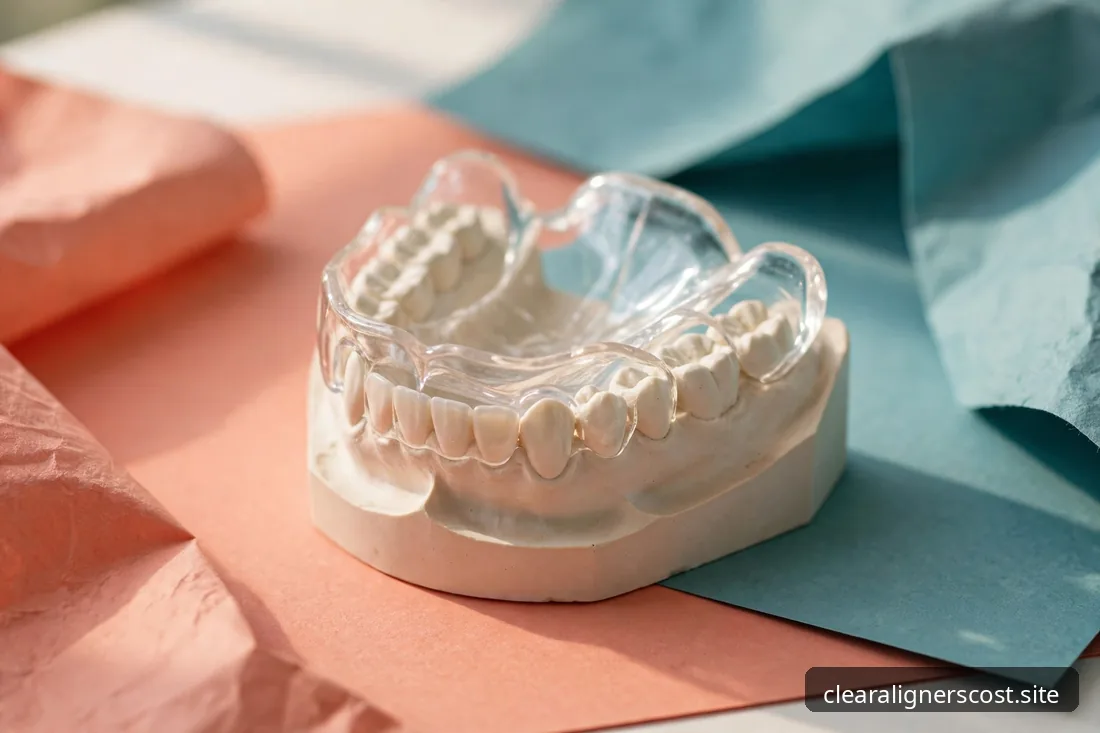
Cheaper alternatives to Vivera
Vivera is the premium option, not the only option. Here’s how the alternatives stack up honestly:
Essix retainers ($50–$200 per set). The most common alternative — clear, removable, custom-made from your impressions or scans. Less durable than Vivera (thinner plastic), so expect more frequent replacements. A solid choice if budget matters and you’re diligent about care. Some online services sell them even cheaper, but fit quality varies — a poorly fitting retainer is worse than none at all, because it can allow drift while feeling “worn.”
Hawley retainers ($150–$300). The classic wire-and-acrylic design. Nearly indestructible, adjustable by your orthodontist, and easy to clean. The tradeoff is visibility — there’s a wire across the front teeth. Many adults dislike the look; many orthodontists love the durability.
Permanent/bonded retainers ($150–$500 per arch). A thin wire bonded behind the front teeth. You can’t lose it and can’t forget to wear it — which solves the compliance problem entirely. Downsides: flossing requires threaders, tartar builds up around the wire faster, and if the wire breaks or debonds, you need a dental visit promptly or teeth start moving.
The honest comparison: Vivera wins on fit precision (made from your final digital scans) and durability among clear options. Essix wins on price. Hawley wins on longevity. Bonded wins on compliance. There’s no universally “best” — there’s only best for your habits and budget. Discuss it with your provider rather than defaulting to whatever’s quoted.
Making retainers last longer
Every extra six months you get from a retainer set is money saved. The care rules are simple:
- Store them in the case, every time. Not in a napkin, not in a pocket. The case is the cheapest insurance you own.
- Clean them daily. Rinse with lukewarm water and use a retainer-specific cleaner or cleaning crystals. Toothpaste is too abrasive for the plastic — it creates micro-scratches that cloud the retainer and harbor bacteria.
- Keep them away from heat. Hot water, dishwashers, and hot car dashboards warp thermoplastic. Lukewarm only.
- Remove them to eat and drink (water excepted) — same rule as active treatment.
- Keep pets away. Dogs famously love chewing retainers. It’s one of the most common — and most expensive — ways retainers die young.
Our full guide to cleaning clear aligners covers the daily and weekly routine in detail — the same principles apply to retainers.
What happens if you stop wearing them
Relapse is sneaky. It doesn’t happen overnight — it happens over months and years:
- Weeks off: retainer feels tight when you put it back on. Teeth have started micro-shifting.
- Months off: visible crowding or spacing returns, especially in the lower front teeth (the most relapse-prone area).
- Years off: significant drift. Some patients end up needing a second round of orthodontic treatment — which costs as much as or more than the first.
The cruel economics: skipping a $200 replacement retainer today can turn into a $3,000–$6,000 retreatment bill later. If cost is the barrier, talk to your provider about cheaper retainer types rather than going without. And if you’re weighing whether aligners are worth it at all, our guide to setting honest expectations covers what treatment can and can’t deliver long-term.
FAQs
How much do Vivera retainers cost?
Typically $400–$1,000 for a package of four upper and four lower retainers, ordered through your dentist or orthodontist. Individual replacement sets cost more per unit.
How long do I have to wear my retainer after Invisalign?
Full-time (22+ hours/day) for the first 6–12 months, then every night indefinitely, or as your provider recommends. Teeth can shift at any age without retention.
Can I get Vivera retainers if I had braces instead of Invisalign?
Yes. Vivera retainers can be made for post-braces patients too — your provider takes a digital scan and orders them through Invisalign’s system.
What’s the difference between Vivera and Essix retainers?
Both are clear and removable. Vivera uses thicker SmartTrack material (Invisalign claims ~30% more durability), comes in 4-packs, and costs more. Essix is thinner, cheaper per set, and needs replacing more often.
Do I really need to wear a retainer every night forever?
That’s the standard recommendation. Some providers eventually allow every-other-night wear for very stable cases, but that’s a decision for your provider — not something to freelance.
Are retainers covered by insurance?
Sometimes partially, under orthodontic benefits — but many plans treat the first retainer as part of treatment and replacements as out-of-pocket. Check your plan’s lifetime orthodontic maximum.
This is general information, not medical advice — talk to your dentist or orthodontist about your situation.