
Direct answer: Rinse your aligners with lukewarm water every time you remove them, brush them gently each day with a soft toothbrush and mild soap (not toothpaste), and soak them in an aligner cleaning solution or crystals a few times a week. Never use hot water, bleach, or abrasive toothpaste — all three damage the plastic.
Key takeaways
- Rinse trays with lukewarm water every time they come out of your mouth.
- Brush daily with a soft toothbrush and mild, clear soap — toothpaste is too abrasive.
- Soak in aligner cleaning crystals or tablets a few times per week for odor and buildup.
- Never use hot water, bleach, denture cleaners with harsh chemicals, or colored mouthwash.
- The same routine applies to retainers after treatment — it protects a lifetime investment.
Why cleaning matters more than you think
Aligners sit against your teeth for 20–22 hours a day in a warm, moist environment — ideal conditions for bacteria, plaque, and odor. A tray that looks clean can harbor a biofilm you can’t see, and that film does three kinds of damage:
To your teeth: bacteria trapped under the tray sit directly against enamel for hours. Poor tray hygiene is linked to cavities, gum inflammation, and the stale-breath problem many aligner patients notice in the first weeks.
To the trays: plaque buildup turns clear plastic cloudy and yellow. Once trays are visibly discolored, no amount of soaking fully restores them — and cloudy trays defeat the “invisible” appeal you’re paying for.
To your treatment: heavy buildup can subtly change how a tray seats. A tray that doesn’t seat fully doesn’t move teeth as planned.
The good news: the routine is simple, cheap, and takes about three minutes a day. It’s one of the highest-return habits in all of aligner treatment — and it carries straight through to retainer care after treatment, where the same trays need to last months instead of weeks.
The daily routine (takes 3 minutes)
Do this twice a day — morning and night — and rinse at every removal in between.
1. Rinse immediately. Every time trays come out (meals, snacks, coffee), rinse them under lukewarm water before they go in the case. Saliva dries into a film within minutes; a 10-second rinse prevents most buildup.
2. Brush gently. Once or twice daily, brush the trays inside and out with a soft-bristled toothbrush and a small amount of mild, clear liquid soap — or just water. Use light pressure and small circles. The goal is to dislodge the day’s biofilm, not to scrub.
3. Rinse thoroughly. Wash off all soap residue with lukewarm water. Leftover soap tastes unpleasant and can irritate gums.
4. Brush and floss your teeth before reinserting. This is the step people skip. Trays should only go onto clean teeth — otherwise you’re sealing the day’s food debris against your enamel for hours. This matters most after meals and before bed.
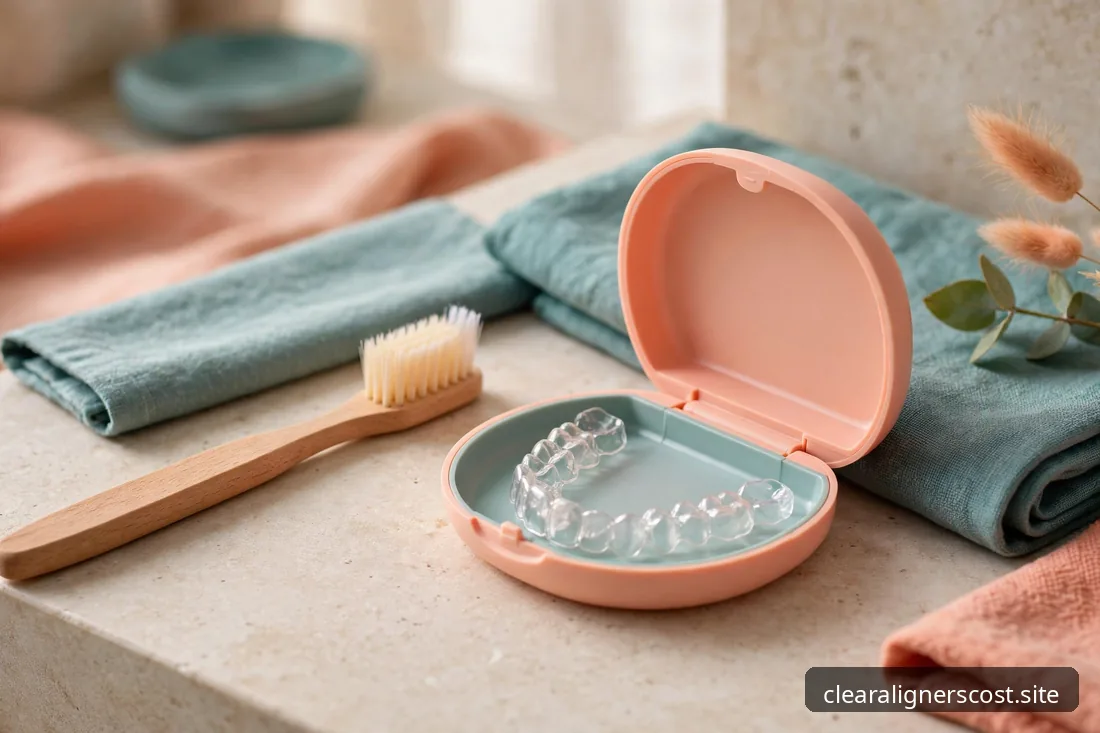
5. Store properly. When trays are out for more than a few minutes, they go in the case — not a napkin, not a pocket, not loose on a restaurant table.
Total time: about three minutes, twice a day, plus 10-second rinses. That’s the entire daily investment.
The weekly deep clean
Even with perfect daily habits, trays accumulate microscopic buildup over a week or two of wear. A deeper soak resets them:
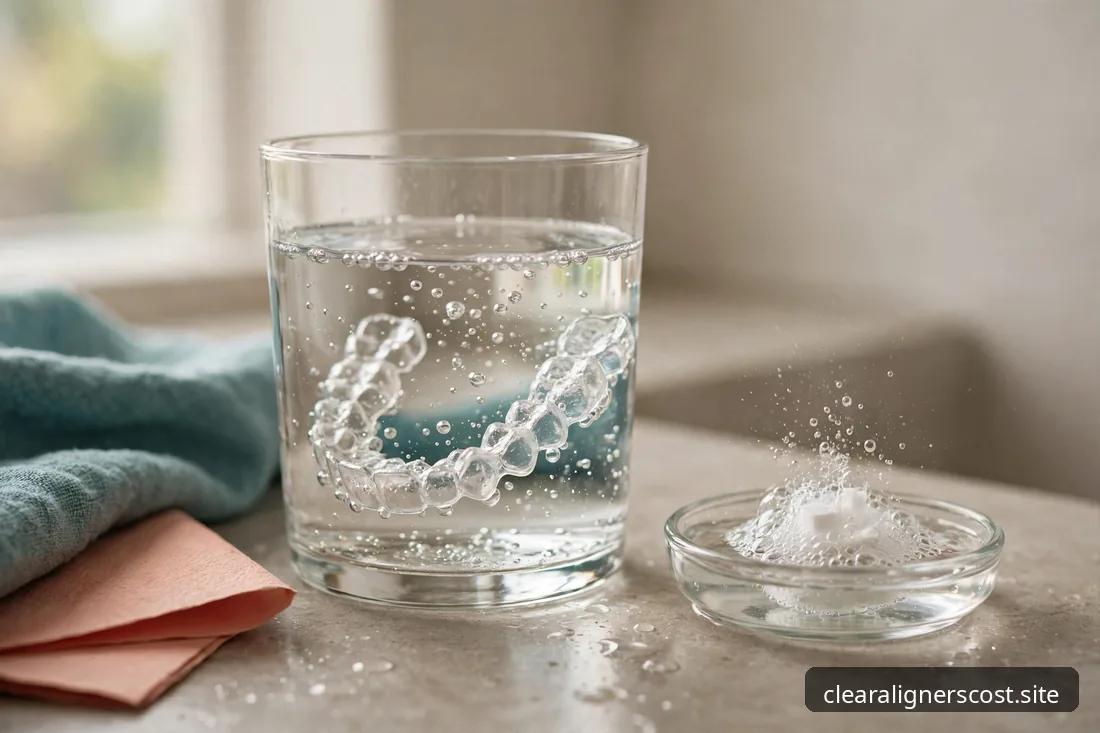
Aligner cleaning crystals or tablets: dissolve one packet in a cup of lukewarm water, drop the trays in, and soak for 15–30 minutes (or as directed). These are formulated specifically for aligner plastic — they lift stains and kill odor-causing bacteria without scratching.
Effervescent denture tablets: a widely used budget alternative. They work on the same principle. Avoid versions with added whiteners or harsh bleaching agents — plain is best.
Diluted white vinegar soak: a 50/50 mix of white vinegar and lukewarm water for 15–20 minutes dissolves mineral deposits. Rinse very thoroughly afterward — vinegar taste lingers.
What about ultrasonic cleaners? Small at-home ultrasonic devices (the kind used for jewelry) are popular with aligner patients and genuinely effective at shaking loose buildup. Use with plain water or a mild cleaning solution, not harsh chemicals. They’re a nice-to-have, not a necessity — the manual routine above handles 90% of the job.
After any soak, give the trays a quick brush and rinse before putting them back in.
What to clean them with
A quick reference for what’s safe and what isn’t:
| Product | Verdict | Notes |
|---|---|---|
| Lukewarm water | ✅ Always safe | The foundation of everything |
| Soft toothbrush + water | ✅ Daily driver | Light pressure, all surfaces |
| Mild clear liquid soap | ✅ Safe | Rinse thoroughly afterward |
| Aligner cleaning crystals/tablets | ✅ Best for deep cleans | Made for this plastic |
| Plain effervescent denture tablets | ✅ Budget deep clean | Avoid whitening formulas |
| Diluted white vinegar | ✅ Occasional use | 50/50 with water, rinse well |
| Ultrasonic cleaner + water | ✅ Effective | Optional upgrade |
What ruins aligners: the don’t list
These are the mistakes providers see constantly — each one shortens tray life or degrades fit:
❌ Toothpaste. The single most common mistake. Toothpaste contains abrasives designed to polish enamel — which is far harder than aligner plastic. On trays, it creates thousands of micro-scratches that turn them cloudy and give bacteria more surface to cling to. Dental sources consistently warn against it.
❌ Hot water. Anything hot enough to be uncomfortable softens thermoplastic. A tray rinsed under hot tap water may look unchanged but fit slightly differently — and fit is everything. Lukewarm only, always.
❌ Bleach and harsh chemicals. They discolor the plastic, degrade it structurally, and leave residues you don’t want in your mouth for 22 hours a day.
❌ Colored mouthwash. Soaking trays in blue or green mouthwash tints them — sometimes permanently. If you want a mouthwash rinse, use a clear, alcohol-free formula, and rinse trays with water afterward.
❌ Dishwashers and microwaves. It sounds absurd, but providers report both. The heat warps trays beyond use.
❌ Scented or moisturizing soaps. They leave films and fragrances on the plastic. Stick to plain, clear, mild soap.
❌ Paper towels and tissues for drying. They leave lint and can scratch. Air-dry in the case or pat with a soft cloth.
If you only remember one rule: if it’s abrasive, hot, or strongly colored, keep it away from your trays.
Dealing with stains, odor, and cloudiness
Yellow staining: usually from coffee, tea, or curry exposure. A cleaning-crystal soak often lightens it. Prevention beats cure — this is why the eating and drinking rules insist on trays-out for everything but water.
Persistent odor: means biofilm has built up in micro-scratches. Step up to daily brushing plus a 30-minute crystal soak, and check whether you’ve been using toothpaste (micro-scratches make odor much harder to eliminate).
Cloudiness: fine scratches from toothpaste or rough handling. Can’t be fully reversed — but a vinegar soak followed by a crystal soak can improve it. If a tray is badly clouded and you’re early in its wear cycle, ask your provider whether it’s still seating properly.
White mineral deposits: chalky spots from saliva minerals, especially in hard-water areas. The diluted vinegar soak dissolves these effectively.
When to give up on a tray: if it’s cracked, warped, or so discolored you can see it when you smile, talk to your provider. A damaged tray that doesn’t seat properly is worse than a brief pause — wearing the previous tray while waiting for a replacement is the standard fallback.
Cleaning while traveling
Treatment doesn’t pause for trips, and neither does bacteria. Pack a kit:
- Travel toothbrush and small toothpaste (for your teeth, not the trays)
- A few cleaning-crystal packets or denture tablets
- A spare tray case
- A small bottle of water for rinsing when sinks aren’t handy
On planes, remove trays before the meal service, eat, do a quick brush or vigorous water rinse in the lavatory, and reinsert. Hotel coffee makers are convenient for heating water — let it cool to lukewarm before any tray contact.
The travel routine is the same as home, just compressed. Patients who keep the kit packed permanently report far fewer “I skipped it because I was traveling” gaps.
FAQs
Can I use toothpaste to clean my Invisalign?
No. Toothpaste is abrasive to aligner plastic — it scratches the surface, causing cloudiness and giving bacteria more places to hide. Use a soft brush with water or mild clear soap instead.
How often should I soak my aligners in cleaning crystals?
Two to three times per week is plenty for most patients, alongside daily brushing and rinsing. Daily soaking isn’t harmful but isn’t necessary either.
Can I clean aligners with hydrogen peroxide?
A brief soak in diluted hydrogen peroxide is used by some patients, but it isn’t necessary and can leave an unpleasant taste. Cleaning crystals designed for aligners are the safer, purpose-built option.
Why do my aligners smell even though I rinse them?
Odor means bacterial biofilm has established itself — rinsing alone doesn’t remove it. Add daily gentle brushing and regular crystal soaks. If odor persists, micro-scratches (often from toothpaste) may be harboring bacteria.
Is it okay to just rinse and skip brushing some days?
Occasionally, yes — rinsing is far better than nothing. But brushing is what actually removes biofilm. Make it a twice-daily habit and you won’t have to think about it.
Do retainers need the same cleaning routine?
Yes — arguably more so, since each retainer is worn for months rather than 1–2 weeks. The same rules apply: lukewarm water, gentle brushing, no toothpaste, regular soaks. See our retainer cost and care guide for the lifetime picture.
This is general information, not medical advice — talk to your dentist or orthodontist about your situation.