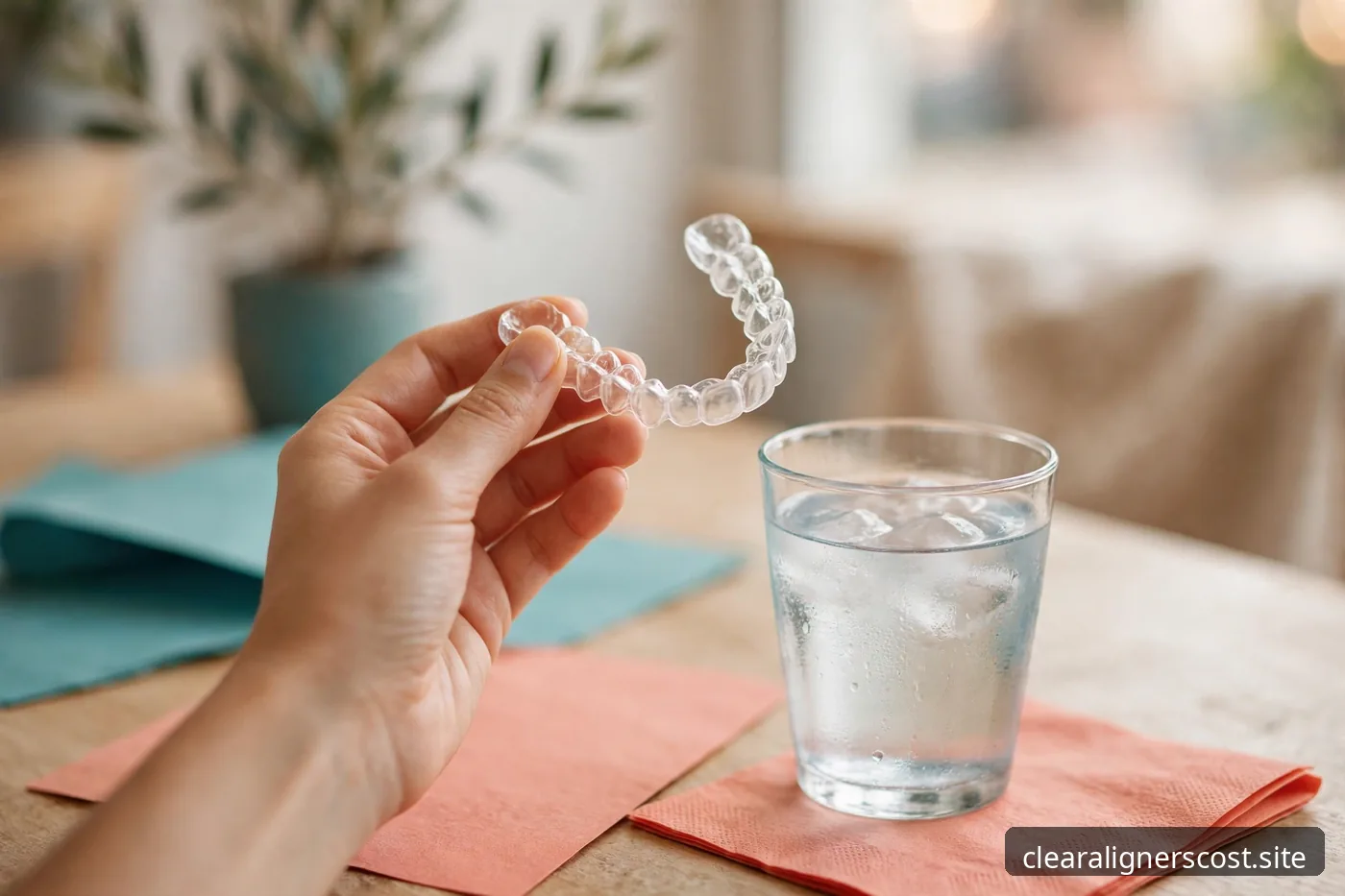
Direct answer: Take your aligners out for every meal, snack, and drink — except cool or room-temperature water. Drinking anything else with trays in stains the plastic, feeds bacteria, and can warp the fit. The goal is 20–22 hours of wear per day, which leaves you about 2–4 hours of “tray-out time” to eat and drink normally.
Key takeaways
- Trays come out for all food and all drinks except plain, cool water.
- Aim for 20–22 hours of daily wear — that leaves 2–4 hours total for meals, snacks, and cleaning.
- Hot drinks warp aligners; colored drinks stain them; sugary drinks trapped under trays raise cavity risk.
- Build a routine around meals instead of grazing, and keep a travel kit with you.
- Cheating occasionally won’t ruin treatment, but habitual cheating slows tooth movement and can add months.
The one rule, explained
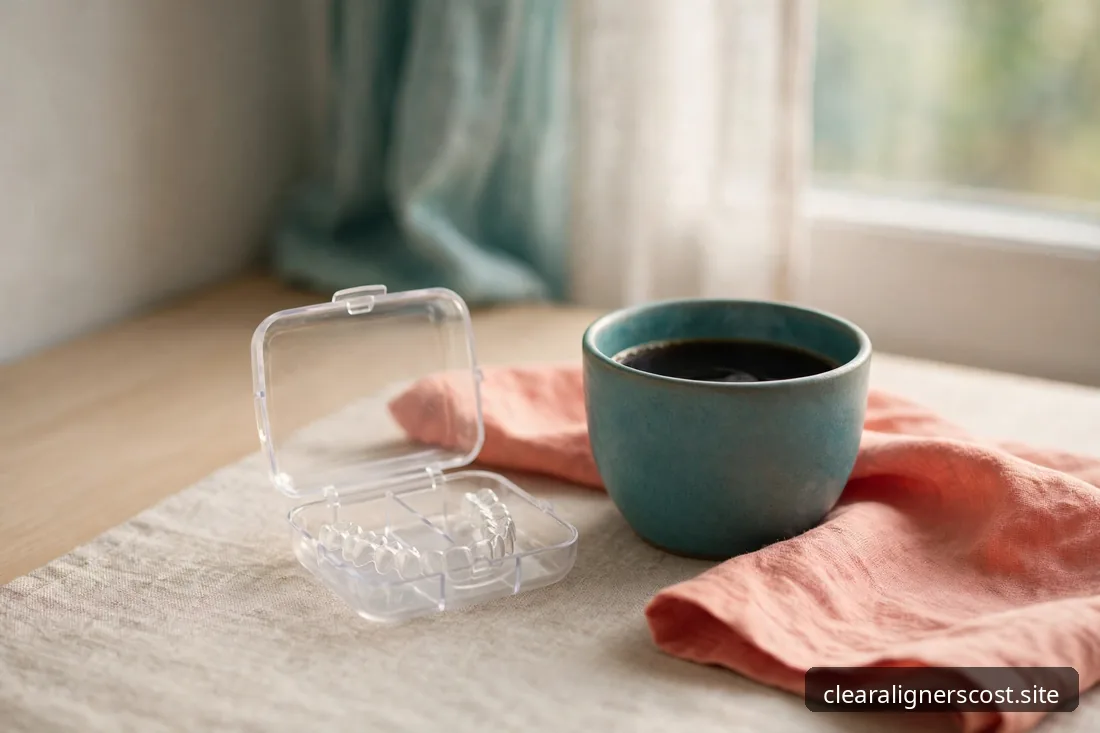
Every Invisalign provider gives the same instruction, and it’s worth taking literally: remove your aligners to eat or drink anything other than water. This isn’t a suggestion or a guideline with wiggle room — it’s the condition your entire treatment plan is built on.
The reason is mechanical. Aligners move teeth with gentle, continuous pressure calibrated to your current tray. That pressure only works while the tray is seated on your teeth. Every hour the trays sit in their case instead of your mouth is an hour your teeth aren’t moving according to plan. Fall short consistently, and trays stop “tracking” — they no longer fit the way they should — which is one of the most common reasons patients end up needing extra refinement rounds.
For the bigger picture of how trays, attachments, and check-ins fit together, see our Invisalign treatment process guide.
Why the rule exists
There are four separate reasons behind the no-eating rule, and understanding them makes the discipline much easier to maintain.
1. Staining. Clear aligner plastic is porous at a microscopic level. Coffee, tea, red wine, curry, turmeric, and tomato sauce will tint the trays yellow or brown within days. One of the main reasons people choose Invisalign over braces is invisibility — stained trays defeat the purpose.
2. Warping. Hot food and hot drinks soften the thermoplastic. A tray that’s been through a few hot coffees may look fine but fit slightly off — and “slightly off” over weeks of wear means teeth that don’t track. Manufacturers and dental sources consistently warn against hot liquids with trays in for this reason.
3. Bacteria and cavities. Food particles trapped between the tray and your teeth create a sealed, sugary environment — essentially a greenhouse for cavity-causing bacteria. Saliva normally washes food debris away; a tray blocks that. Dentists flag this as one of the biggest avoidable risks of aligner treatment.
4. Physical damage. Biting and chewing with trays in flexes the plastic in ways it wasn’t designed for. Cracks, stress fractures, and warped edges mean a tray that doesn’t seat properly — and a replacement tray typically costs $100–$300 if you crack one.
The 20–22 hour rule, as a daily budget
The widely cited wear target for Invisalign is 20–22 hours per day. Think of it as a budget: you get roughly 2 to 4 hours of tray-out time in each 24-hour period, and everything — meals, snacks, drinks, brushing, and cleaning the trays — has to fit inside it.
Here’s what that looks like in practice:
| Activity | Typical tray-out time |
|---|---|
| Breakfast | 20–30 min |
| Lunch | 30–45 min |
| Dinner | 30–45 min |
| Brushing + flossing + tray cleaning | 10–15 min per session |
| Total (3 meals, no snacks) | ~2–2.5 hours |
That math is the reason grazing is the enemy of aligner treatment. Three square meals fit comfortably in the budget. Three meals plus two snacks plus a slow coffee plus a post-workout smoothie do not. Research and clinical observation suggest a significant share of patients — estimated at 30–40% — don’t consistently hit the 20–22 hour target, and every hour below the threshold slows tooth movement and raises the risk of paid refinement rounds.
If your treatment seems to be taking longer than planned, our guide to how long Invisalign really takes explains where the delays usually come from.
Drinks: what you can and can’t have
With trays in:
– Plain cool or room-temperature water — always fine.
– Sparkling water (unflavored) — generally acceptable, though some providers suggest rinsing after.
Trays out only:
– Coffee and tea — the worst staining offenders, and hot versions warp plastic.
– Soda and juice — sugar plus acid trapped against teeth is a cavity recipe.
– Wine, beer, cocktails — staining plus sugar; alcohol can also dry out the plastic.
– Smoothies and protein shakes — seem healthy, still full of sugar and pigment.
– Hot drinks of any kind — heat is the warping risk, regardless of color.
A common question: what about drinking through a straw with trays in? Providers generally say no — liquid still reaches the trays, and the convenience isn’t worth the staining and bacteria risk.
Coffee drinkers: a survival routine
Coffee is where most aligner patients struggle, because the old habit is sipping slowly over an hour or two. That habit has to change — but you don’t have to give up coffee.
The 20-minute coffee rule: Remove trays, drink your coffee within about 20 minutes, rinse your mouth with water (or brush if you can), and put the trays back in. Treat coffee like a short appointment rather than a background activity.
Cold brew and iced coffee are marginally kinder than hot — no warping risk — but they still stain, so trays stay out either way.
At the office: keep a small kit at your desk — tray case, travel toothbrush, and a water bottle. Excuse yourself, remove trays discreetly in the restroom or break room, and return them to the case (never a napkin — thousands of trays are thrown away every year wrapped in napkins).
Cream and sugar: make staining and cavity risk worse, not better. If you take your coffee light and sweet, be extra diligent about rinsing before the trays go back in.
Eating routines that actually work
The patients who sail through treatment tend to converge on the same habits:
Consolidate into meals. Three defined meals with no between-meal snacking is the easiest pattern. If you need a snack, make it part of a meal rather than a separate tray-out session.
Batch your tray-out time. Remove trays, eat, brush, clean trays, reinsert — as one continuous sequence. The mistake is removing trays for lunch and then “forgetting” to put them back for two hours.
Set a timer. Seriously. A phone timer for 30–45 minutes at each meal is the single most effective compliance trick patients report. It’s easy to lose track of time; the timer doesn’t.
Prep a travel kit. A small pouch with your tray case, a travel toothbrush, toothpaste, and floss picks lives in your bag or car. With it, you can eat anywhere and get trays back in within minutes.
Plan around events. Weddings, long dinners, holidays — these are the days treatment stalls. Enjoy them, but get back on schedule the next day rather than letting a weekend become a week.
Social situations and dining out
Nobody wants to make a production of removing dental appliances at a restaurant table. Practical approaches:
- Excuse yourself to the restroom before the meal to remove trays and put them in the case. Return them after dessert, with a quick rinse or brush.
- Order water with the meal. It’s the one thing you can sip freely with trays back in.
- Don’t announce it. A brief “excuse me” is all anyone needs. Most people won’t notice or care.
- Business lunches: the tray case in a jacket pocket or bag keeps everything discreet. The 20-minute discipline matters more here than anywhere, since work meals tend to sprawl.
One honest note: the first two weeks feel awkward. By week three, the routine is automatic, and most patients report it becomes second nature.
What happens if you cheat
Let’s be realistic — almost everyone slips. Here’s an honest breakdown of consequences by frequency:
Occasional slip (once or twice a month): A sip of iced tea with trays in, or forgetting trays out for an extra hour. Rinse, move on. No meaningful impact on results.
Regular habit (daily coffee with trays in, frequent grazing): Trays develop a yellow tint within a week or two, breath odor increases, and wear time silently drops to 16–18 hours a day. This is where treatment starts falling behind schedule — and where the cavity risk climbs.
Chronic non-compliance (trays out most of the day): Teeth stop tracking the trays. Your provider will notice at the check-in: trays won’t seat fully, and gaps appear between tray and teeth. The fix is usually backtracking to earlier trays or ordering refinements — which can add months and, on lower-tier plans, real money.
The throughline: the rules aren’t about perfection. They’re about making good wear the default so the occasional lapse doesn’t matter. And when treatment ends, keeping trays clean matters just as much — our guide to cleaning clear aligners covers the daily routine.
FAQs
Can I drink coffee with Invisalign in if it’s iced?
No. Iced coffee still stains the trays and feeds bacteria — the “no drinks except water” rule applies regardless of temperature. Remove the trays, enjoy the coffee, rinse, and reinsert.
Can I chew gum with aligners in?
No. Gum sticks to the plastic, and chewing flexes the trays. Sugar-free gum with trays out is fine and can help with dry mouth.
What if I accidentally eat with my aligners in?
Remove them as soon as you realize, rinse both your mouth and the trays with cool water, and brush before reinserting. One accident won’t derail treatment — just don’t make it a habit.
Does sparkling water count as water?
Unflavored sparkling water is generally considered acceptable by most providers, since it’s the flavorings, sugars, and colors that cause problems. When in doubt, ask your own provider.
How do I handle long flights or road trips?
Keep trays in as much as possible, remove them only for meals, and use bottled water for rinsing. A travel kit with a spare case is essential — never wrap trays in a napkin in an airport.
Will my provider know if I haven’t been wearing them?
Usually, yes. Poor tracking is visible: trays won’t seat fully, attachments won’t engage, and tooth movement lags the plan. Providers see this pattern constantly.
This is general information, not medical advice — talk to your dentist or orthodontist about your situation.