
At-home aligners cost $795–$2,295; in-office Invisalign costs $3,000–$8,500. The price gap isn’t a market inefficiency — it reflects a genuine difference in supervision, diagnostic depth, and clinical capability. Remote treatment can be a reasonable choice for very mild cases, but the trade-offs are real, and the industry’s biggest cautionary tale — SmileDirectClub’s 2023 collapse — shows what happens when the model fails. Here’s the full, honest comparison.
Key takeaways
- The $2,000–$6,000 gap pays for X-rays, attachments, IPR, hands-on monitoring, and unlimited refinements — not just office overhead.
- Remote-only treatment can’t diagnose bone loss, root problems, or gum disease from photos and putty impressions.
- SmileDirectClub filed for bankruptcy in September 2023 and shut down that December, stranding tens of thousands mid-treatment — company stability matters.
- At-home can work for very mild, dentist-cleared cases; anything involving bite, complex movement, or uncertainty belongs in an office.
The Price Gap, Explained
| At-home (Byte, Candid, AlignerCo) | In-office (Invisalign) | |
|---|---|---|
| Upfront cost | $795–$2,295 | $3,000–$8,500 |
| Payment plans | ~$2,400–$3,336 total | $150–$300/mo in-house, often 0% |
| Treatment time | 4–6 months typical | 12–18 months typical |
| Case scope | Very mild to moderate | Mild to complex |
The gap exists because in-office treatment includes things with real costs: X-ray equipment and 3D scanners, chairside staff, attachments and IPR procedures, ongoing clinical monitoring, and refinement lab fees. Remote brands strip all of that out — and narrow the treatable case scope accordingly. You’re not getting the same product cheaper; you’re getting a narrower product cheaper. For some cases, the narrower product is genuinely sufficient.
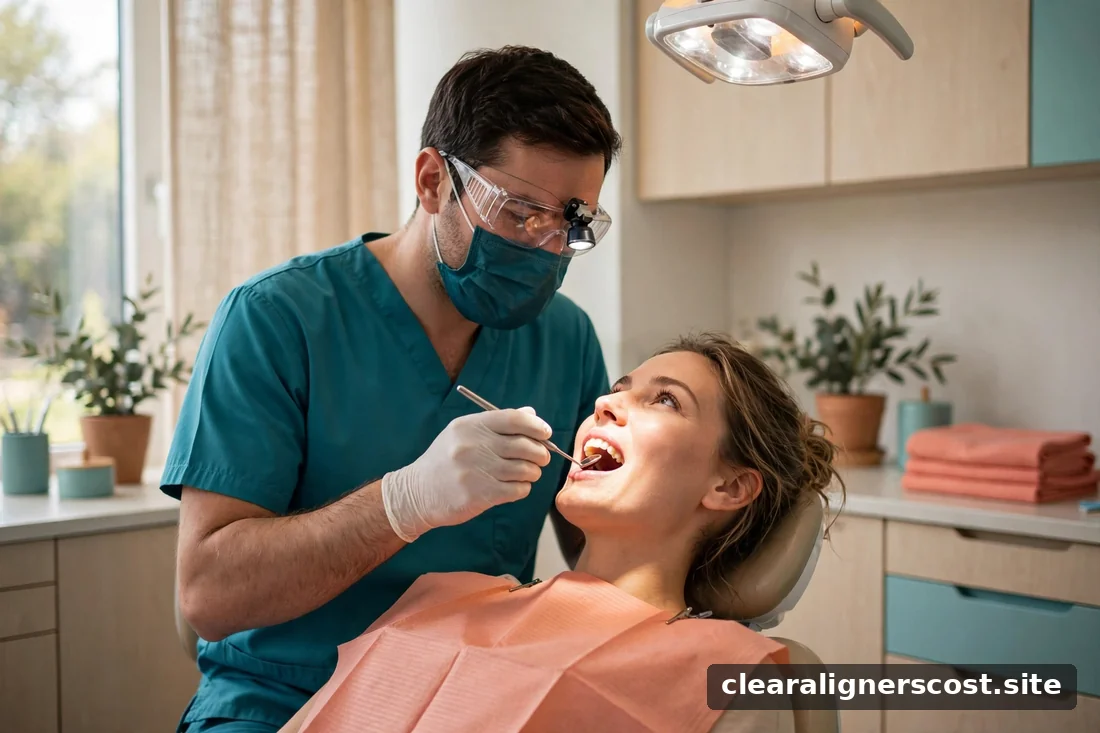
What In-Person Supervision Actually Gives You
This is the part marketing glosses over. An in-office orthodontist provides:
- Real diagnostics. X-rays reveal root positions, bone levels, and impacted teeth. A 3D scan maps the full mouth. Photos and putty impressions show surfaces only — they can’t reveal the bone loss or short roots that make tooth movement dangerous.
- Attachments and IPR. Tooth-colored bumps bonded to teeth give aligners grip for difficult movements; interproximal reduction creates fractions of millimeters of space where needed. Remote treatment offers neither, which is the main reason its scope stops at mild cases.
- Hands-on tracking checks. At check-ins, the provider physically verifies that trays are seating, attachments are engaging, and teeth are tracking the plan — catching problems months before they’d show in patient-submitted photos.
- Mid-course correction. When teeth don’t move as planned, an in-office provider rescans, redesigns, and orders refinements immediately. Remote refinement cycles are slower and, on budget brands, may cost extra.
- Accountability for compliance. Knowing your orthodontist will see whether you’ve been wearing your trays is a powerful motivator — and non-compliance is the top driver of paid refinements.
Licensed orthodontists do review remote cases — Byte, Candid, and their peers all state this — but remote review of photos is a different clinical act than an in-person exam. Both can be called “orthodontist-supervised”; they’re not the same supervision.
The Risk Profile of Remote-Only Treatment
Stated plainly, without alarmism:
- Undiagnosed problems. Moving teeth with untreated gum disease or decay can cause irreversible damage — tooth loss, in severe cases. An in-person exam rules these out; a remote screening from molds cannot fully do so.
- Bite damage. Straight-looking front teeth with a misaligned bite can cause jaw pain, uneven wear, and TMJ issues. Remote plans optimize for the visible smile; in-office plans manage the whole bite.
- No rescue path. If something goes wrong mid-treatment with a remote brand, there’s no local provider who knows your case. You’re starting over with a new clinician — at full price.
- Company risk. You’re prepaying for months of treatment and years of retainer support from a company that must stay solvent. This isn’t theoretical (see below).
None of this means remote aligners injure most patients — for mild, dentist-cleared cases, they typically don’t. It means the risk is concentrated in exactly the cases remote brands shouldn’t be treating, which is why honest candidacy screening (and your own pre-treatment dental checkup) matters so much.
The SmileDirectClub Lesson
SmileDirectClub was the biggest at-home aligner company in the world — $1,950 treatment delivered to your door, no orthodontist visits, heavy advertising. In September 2023 it filed for bankruptcy, and shut down operations that December, leaving tens of thousands of active patients mid-treatment with no path to complete their plans and no refunds, as documented in Calciflow’s industry breakdown.
The lessons for anyone considering remote treatment:
- Price isn’t the whole cost. A $2,000 treatment that fails and requires $6,000 of corrective orthodontics is a $8,000+ treatment with extra months of pain.
- Company stability is a clinical factor. With in-office treatment, your provider is a local practice — if Align Technology vanished tomorrow, your orthodontist would still be there. With remote treatment, the company is the provider. Research financial health and refund policies before prepaying.
- Remote-only supervision was always the structural risk. When problems occurred, patients had no local clinician to turn to. That risk is inherent to the model, not specific to one company.
This doesn’t mean every remote brand will fail — but it means “what happens to my treatment if this company shuts down?” is a legitimate question to ask before you pay.
How to Vet an At-Home Company
Before ordering any remote aligner kit, work through this checklist:
- Get a dental checkup first. Confirm no untreated decay, gum disease, or other contraindications. This is non-negotiable.
- Read the refund and cancellation terms. Under what conditions do you get money back? What happens mid-treatment if you’re deemed no longer a candidate?
- Read the refinement terms. How many refinement rounds are included? What’s the per-round cost beyond that? Get it in writing.
- Check retainer terms. First set free? Replacement cost? (Byte: first free, then $99/set; Candid: $99/set.)
- Research company stability. How long operating? Recent funding or financial news? What’s the plan for existing patients if the company is acquired or closes?
- Read recent third-party reviews. Look for patterns in complaints — shipping and support responsiveness are the common themes across budget brands.
- Understand the candidacy screen. A company that accepts everyone is a red flag; a real clinical screen rejects cases outside its scope.
The Monitoring Question: Photos vs Chairside
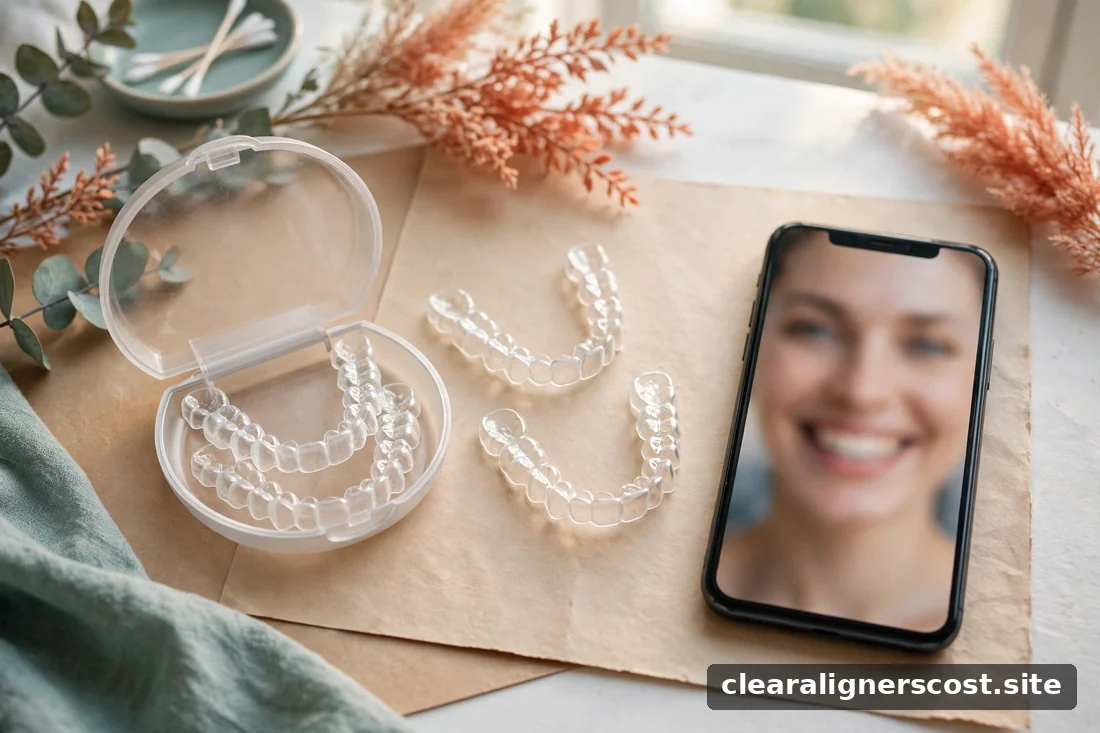
The deepest practical difference between the two models is how progress gets checked — and this is where remote treatment’s limitations are most concrete.
In-office monitoring means a trained clinician physically examining your mouth every 6–10 weeks: checking that each tray seats fully, that attachments are engaging, that the bite is developing as planned, and that gums look healthy. Problems get caught early, when a mid-course correction is a rescan and a new tray series — not a rescue operation.
Remote monitoring means you photograph your teeth on a schedule and an orthodontist reviews the images. Good systems catch obvious tracking failures. But photos can’t show how a tray feels seating over an attachment, can’t measure sub-millimeter tracking lags reliably, and can’t spot the early gum inflammation that a chairside exam catches in seconds. The patient also has to notice problems to flag them — and most patients can’t distinguish “normal tightness” from “this tooth isn’t tracking” until the deviation is visible.
This doesn’t make remote monitoring useless — for mild cases progressing normally, it’s adequate. It makes it a lagging indicator instead of a leading one: in-office care tends to catch problems before they cost money; remote care tends to catch them after. That lag is part of what you’re (not) paying for in the $795–$2,295 price band, and it’s worth understanding before you choose.
Who At-Home Treatment Can Work For
- Very mild crowding or spacing, healthy bite, healthy gums — confirmed by a recent in-person dental exam
- Adults who’ll reliably wear trays 22 hours a day and submit monitoring photos on schedule
- Budget-constrained patients for whom $795–$2,295 makes treatment possible and $5,000+ doesn’t
- Patients near a hybrid option (like Candid’s studio scans) who’ll use the in-person touchpoint
Our brand-specific breakdowns — Byte pricing and Candid vs Invisalign — compare the remote options head to head.
Who Needs In-Office Care
- Any bite issue: overbite, underbite, crossbite, open bite
- Moderate-to-severe crowding, significant rotations, complex movement
- Cases needing attachments, IPR, or elastics
- Active or recent gum disease, extensive dental work, missing teeth in the treatment area
- Teens, or anyone whose compliance is uncertain
- Anyone a remote brand has already rejected — treat that as a diagnosis, not a sales obstacle
When in doubt, the in-person consultation (often free) is the cheapest, most informative step in the process. See Invisalign cost tiers for what in-office treatment costs at each level.
FAQ
Are at-home aligners safe?
For very mild cases in patients with healthy teeth and gums (confirmed by an in-person exam), remote aligners from established brands are generally considered a reasonable option. The safety concerns concentrate in cases beyond the mild scope, patients with undiagnosed dental problems, and the lack of in-person monitoring.
Why are at-home aligners so much cheaper than Invisalign?
No offices, no X-ray equipment, no chairside staff, no attachments/IPR procedures, narrower case scope, and remote-only monitoring. The price reflects a genuinely narrower service, not the same service at a discount.
What happens to my treatment if the aligner company goes out of business?
That’s the SmileDirectClub scenario: treatment stops, refunds may not come, and you pay a local orthodontist full price to take over or restart. It’s why company stability and refund terms belong in your pre-purchase research.
Do at-home aligners work as well as Invisalign?
Within their narrow scope (very mild cases), established remote brands report satisfactory cosmetic results in customer reviews. Beyond that scope, they’re not comparable — Invisalign’s in-person supervision, attachments, and refinement capacity handle what remote treatment can’t.
Should I see a dentist before ordering an at-home kit?
Yes — this is the single most important recommendation in this article. A $100–$200 exam rules out the decay, gum disease, and bone issues that make unsupervised tooth movement risky. No remote screening replaces it.
This is general information, not medical advice — talk to your dentist or orthodontist about your situation.